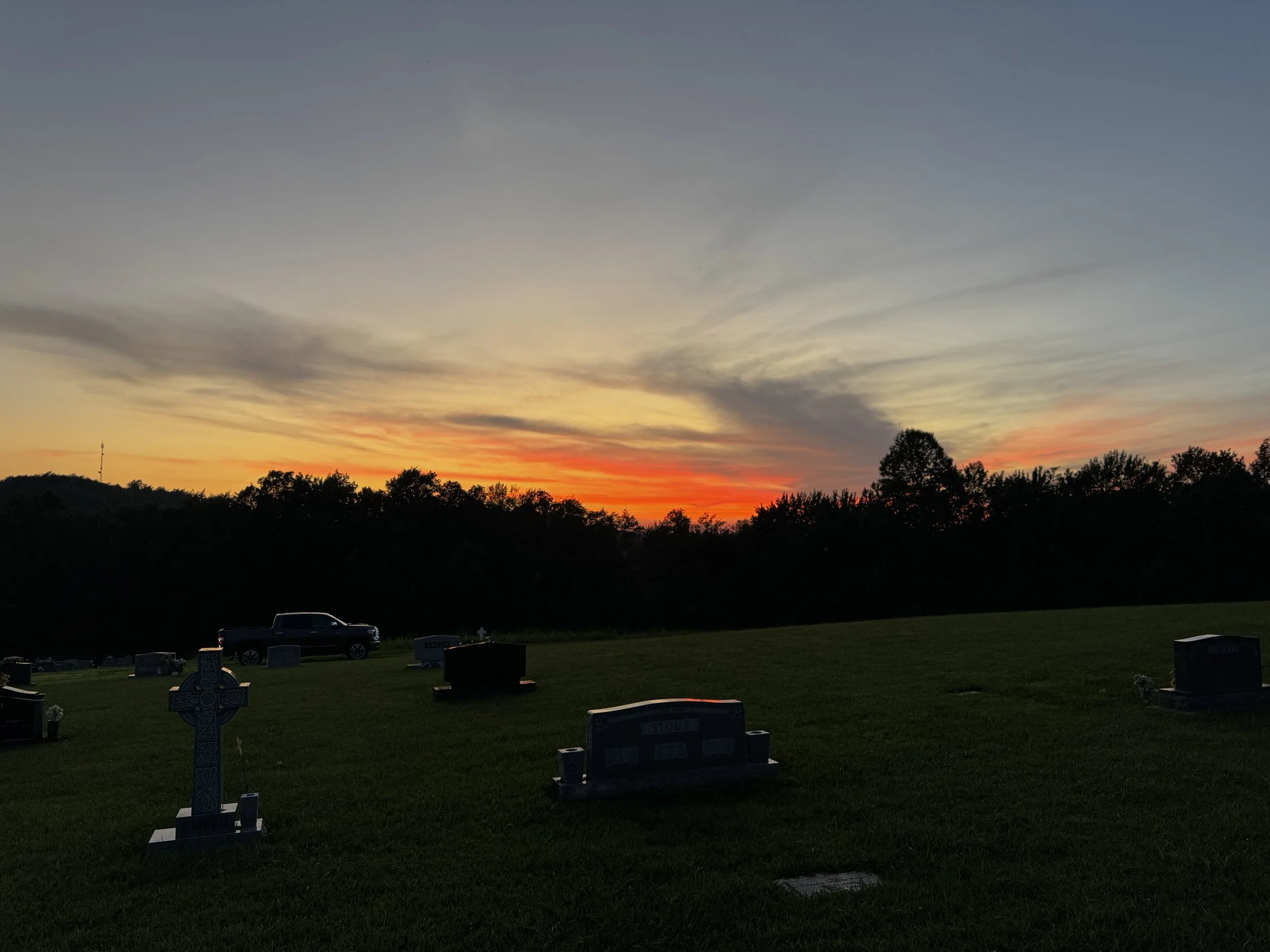
The Long Game
Setbacks, Rural America, and the Work of Building Something That Lasts
Part 1 What Was Taken
There are days when restoring an old building feels like an act of discovery.
You pull back something that has been covered for decades and find craftsmanship underneath. You walk into a room you have passed through a hundred times and suddenly notice some small detail left behind by the people who built it. You clear another corner of the property and begin to see what the land might become.
And then there are days when you discover that someone has broken in and stolen the copper.
Those days feel a little different.
The Historic Oddfellow Manor has been standing in Elkins, West Virginia, since 1908. More than a century of weather, changing ownership, changing purposes, deferred maintenance, and simple old age have left us with no shortage of things to repair. We knew that when we started.
We knew about the hundreds of windows.
We knew about the environmental remediation.
We knew about the aging mechanical systems, the roofs, the walls, the grounds, and all the innumerable surprises that come with taking responsibility for a building that was already old before most of us were born.
Those are the kinds of problems you expect when you decide to save something.
What is harder to accept are the problems someone creates for you.
In July, someone broke into the Manor and began stripping copper from the building. Copper lines were cut and removed. Part of the old fire-hose system was taken. Things that had survived decades of abandonment disappeared, not because they had finally failed, but because someone decided that whatever value they could extract from them today was worth more than leaving them for tomorrow.
There is a peculiar frustration in standing inside a building you are trying to put back together and looking at something another person deliberately took apart.
The immediate reaction is anger.
There is the cost, certainly. Every dollar spent replacing something that was stolen is a dollar that cannot be spent restoring something else. There is the lost time. There is the inconvenience. There are calls to make, reports to file, security to reconsider, and another problem added to a list that was already long enough.
But underneath the anger was another feeling that was harder to name.
I kept thinking about the contradiction.
We are trying to take a place that has been neglected and return value to it. We are planting trees whose shade we may not sit beneath for many years. We are restoring land. We are imagining classrooms and workshops and gardens and gatherings inside spaces that are currently empty. We are spending time and money today because we believe this place can matter tomorrow.
And someone else walked into that same building and saw something entirely different.
They saw what could be taken from it right now.
I don't know who entered the Manor that night. I don't know what circumstances brought that person through the door, what they intended to do with what they took, or what pressures existed in their life outside those walls.
It would be easy to invent those answers.
It would also be unfair.
But it is difficult to live in West Virginia and not recognize that this small event occurred against a much larger backdrop.
For decades, communities throughout our state and across Appalachia have wrestled with addiction, poverty, disappearing economic opportunities, declining populations, and the consequences that follow when enough people begin to believe that tomorrow may not offer much more than today.
The copper missing from our walls is a very small piece of that story.
But standing there looking at the places where it had been cut away, I found myself thinking about time.
About what happens when a person can afford to think years into the future.
And what happens when they can't.
About the difference between extracting value from something today and building value that may not be realized for decades.
And, perhaps most importantly, about which of those choices ultimately determines what becomes of a community.
Part 2 A Simple Story About a Complicated Place
It is tempting to tell a simple story about what has happened to West Virginia.
We have heard versions of it for years.
The mines closed. Good jobs disappeared. Young people left. Poverty settled in. Opioids arrived. Addiction followed. Communities deteriorated, crime increased, buildings were abandoned, and another generation grew up wondering whether there was anything here worth staying for.
There is truth buried inside that story.
But it is not the whole truth.
The scale of what happened here is difficult to overstate. In its most recent study of the region's diseases of despair, the Appalachian Regional Commission found that overdose mortality among Appalachians remained substantially higher than in the rest of the country. West Virginia has borne an especially heavy burden.
Those deaths are more than an epidemiologic curve.
They are empty chairs at kitchen tables.
They are grandparents raising grandchildren. They are parents burying children and children growing up without parents. They are coworkers who stopped showing up, patients who came back after another overdose, families who learned to keep naloxone nearby, and small communities where nearly everyone knows someone whose life was changed by addiction.
For those of us who live here, the opioid epidemic has never been an abstraction.
But neither did it appear in a vacuum.
West Virginia's median household income remains under $60,000, and roughly one in six West Virginians lives below the poverty line. Across Appalachia, income continues to trail the nation, and the differences become much greater in the region's most economically distressed communities. In those counties, fewer than six in ten working-age adults participate in the labor force, and nearly one in four residents lives in poverty.
Those numbers describe something larger than a shortage of money.
They describe a shortage of options.
Steady employment, transportation, education, housing, health care, treatment for addiction, and even reliable internet access can all become more difficult depending upon which hollow, town, or county someone happens to call home.
None of that excuses stealing.
Poverty does not make someone a criminal. Addiction does not erase responsibility. Most people struggling with either will never break into another person's property, strip copper from a building, or take something that does not belong to them.
That distinction matters.
It would be both unfair and inaccurate to look at the damage inside the Manor and simply say, “This is what addiction has done to West Virginia.”
But it would be equally dishonest to pretend that the problems are completely unrelated.
When communities lose opportunity over generations, consequences accumulate. When addiction enters those same communities, it compounds problems that were already there. Families become less stable. Health deteriorates. People leave. Buildings become vacant. Tax bases shrink. Businesses struggle. Communities have fewer resources available to address the very problems making recovery difficult.
And eventually a place can begin to look as though decline is simply what happens there.
That may be the most dangerous part of the story.
Not poverty.
Not even addiction.
The belief that nothing is going to get better.
Because hopelessness changes the way we think about time.
When tomorrow feels uncertain, today becomes enormously important.
When next year does not seem likely to be better than this year, it becomes harder to sacrifice something today for a benefit that may not arrive for years.
And when that thinking takes hold across enough lives and enough institutions, communities begin making decisions around survival instead of possibility.
Perhaps that is why the missing copper bothered me beyond the value of what was stolen.
There was something almost painfully symbolic about it.
A piece of a 118-year-old building had survived generations of change only to be cut apart because its value as scrap today outweighed whatever purpose it might serve tomorrow.
And yet there is another story unfolding in Appalachia at exactly the same time.
Poverty across the region has been falling. Household incomes and educational attainment have been rising. The Appalachian Regional Commission now reports that the number of counties classified as economically distressed is near the lowest level recorded during the history of its current classification system.
The opioid epidemic has inflicted terrible damage, but even overdose deaths have begun moving in the right direction.
None of these improvements means the work is finished.
They mean the work is working.
That distinction is important.
There are people across Appalachia opening businesses, treating addiction, teaching children, restoring buildings, rebuilding downtowns, planting farms, creating nonprofits, preserving history, and deciding—sometimes without much evidence immediately in front of them—that their communities still have a future.
They are making a wager on tomorrow.
So are we.
Every time we repair a window at the Manor, clear another piece of land, plant another tree, restore another room, or make another plan for something that may take years to complete, we are making essentially the same argument:
This place is not finished.
Neither is West Virginia.
Part 3 The Tyranny of the Short Game
There is a luxury we rarely recognize as a luxury:
Being able to think about the future.
To save money instead of spending it.
To plant a tree knowing it may take ten years before it provides meaningful shade.
To pursue an education that will not pay off for years.
To repair something rather than discard it.
To endure inconvenience today because we believe tomorrow will be better for having done so.
All of these things require something more fundamental than patience.
They require faith in tomorrow.
When life becomes unstable enough, that faith becomes harder to maintain.
If the electric bill is due Friday, retirement is not the problem.
If there is no food in the refrigerator, next month's budget becomes less important than tonight's dinner.
If addiction has narrowed someone's world to the distance between one dose and the next, consequences that might arrive next week can seem impossibly far away.
The future does not disappear.
It simply loses the argument to today.
That is the tyranny of the short game.
And while its most extreme examples are easy to recognize, none of us is completely immune to it.
We choose the easier solution because the better one takes too long. We postpone maintenance. We spend rather than save. We abandon projects when progress becomes difficult to see. Governments defer infrastructure. Businesses sacrifice long-term stability for another quarter of growth. Communities allow buildings to deteriorate because demolition is cheaper than restoration.
Again and again, we exchange tomorrow for something easier today.
Sometimes we do it because we are shortsighted.
Sometimes because we are desperate.
And sometimes because the problems in front of us have become so large that imagining anything beyond them feels almost foolish.
That is why I keep returning to the copper.
Copper has value.
So does a building.
But they exist on very different timelines.
Cut a length of copper from a wall, carry it away, sell it as scrap, and its value can be realized almost immediately.
Leave it in the wall and its value is quieter. It becomes part of a system. It serves a building. It helps preserve something larger than itself.
The same object can therefore represent two entirely different ideas of value.
One asks:
What can I get from this today?
The other asks:
What can this become tomorrow?
Those questions extend far beyond an old building in Elkins.
For generations, Appalachia has wrestled with extraction.
Timber left our mountains.
Coal left beneath them.
Natural gas traveled through pipelines.
Young people left in search of opportunity.
We became extraordinarily good at measuring the value of what could be taken from this place.
Perhaps we have not always been as good at measuring the value of what could remain.
A forest is worth something when its timber is cut.
It is also worth something when the trees are still standing.
A mountain is worth something for what lies beneath it.
It is also worth something for the communities built around it.
A young person is valuable as a worker somewhere else.
But imagine the value of giving that same person a reason to build a life here.
And an old building has value in brick, timber, metal, acreage, and whatever else can be removed and sold.
But that may be the least interesting measure of its worth.
This is one of the lessons the Manor keeps teaching us.
Historic preservation is almost irrational when measured entirely by the short game.
There will almost always be a cheaper building.
There will almost always be an easier property.
New construction can be designed around modern codes rather than adapted to them. New windows arrive square. New walls generally do not contain surprises. New electrical systems do not require archaeological investigation before someone flips a breaker.
Nobody looking for the easiest path would begin with a 1908 building containing hundreds of windows and more than a century's worth of accumulated problems.
And yet here we are.
Because preservation asks a different question.
Not:
What is easiest?
Not even:
What is this worth today?
But:
What would be lost if we stopped believing this was worth saving?
That question changes the calculation.
Suddenly the scarred floors matter because generations walked across them.
The old chapel matters because people once gathered there.
The orchard matters because trees planted today may feed people years from now.
The land matters because soil can be restored.
The building matters because something created more than a century ago can still become something its builders never imagined.
And the community matters for exactly the same reason.
This is where compassion and accountability have to coexist.
We can lock the doors.
We can install cameras.
We can call the police when someone breaks in.
We can expect people to be responsible for the harm they cause.
And we can still ask what kind of community makes fewer people desperate enough, addicted enough, disconnected enough, or hopeless enough to make those choices in the first place.
Those ideas do not contradict one another.
In fact, I think they are both necessary if we actually intend to build something better.
Punishment deals with what happened yesterday.
Prevention requires us to imagine tomorrow.
And restoration—whether of a person, a building, or a community—requires both honesty about what has been damaged and faith that the damage does not have to be permanent.
That faith is difficult.
The short game constantly offers evidence that it is foolish.
Another repair.
Another expense.
Another delay.
Another disappointment.
Another thing somebody broke after someone else worked hard to fix it.
The long game offers much less immediate reassurance.
Mostly, it asks us to keep going.
To plant things.
To repair things.
To teach things.
To preserve things.
To invest in people whose results we may never see.
To believe that work can matter even when the reward belongs partly to someone else.
The people who built the Oddfellow Manor in 1908 understood that, whether they would have described it that way or not.
They built something they could not possibly have expected us to be standing inside 118 years later.
They played the long game.
Now it is our turn.
Part 4 The Long Game
The trouble with playing the long game is that you still have to live through every day of it.
Knowing that something may take twenty years does not make today's setback less frustrating.
A stolen piece of copper still has to be replaced.
An unexpected repair still has to be paid for.
A grant that does not come through still changes the plan.
A project that was supposed to begin this spring may become a project for next spring.
And sometimes an entire day of work ends with the uncomfortable realization that all you accomplished was uncovering three more things that need to be fixed.
There are days when progress at the Manor is obvious.
A field gets cleared.
A garden takes shape.
A tree goes into the ground.
A room gets cleaned.
A section of the building that seemed forgotten begins to look alive again.
Those days are wonderful.
But much of the work does not look like that.
Progress can be an environmental report.
A meeting.
A phone call.
A survey.
An estimate.
A conversation with a bank.
A historic-preservation application.
A contractor walking through the building and telling us that something will cost considerably more than we hoped.
Sometimes progress is simply learning enough about a problem to understand how much work remains.
That can be difficult to celebrate.
We are accustomed to measuring progress by completion.
The room is finished.
The building is open.
The garden is producing.
The ribbon gets cut.
The photographs get taken.
Everyone can see that something happened.
But projects like this require another way of keeping score.
Sometimes progress is not finishing something.
Sometimes progress is preventing something from being lost.
Sometimes it is making the next step possible.
Sometimes it is simply refusing to quit.
That last one matters more than I used to think.
When we first began imagining what the Historic Oddfellow Manor might become, dreaming was easy.
There were so many possibilities.
A restored historic building.
Gardens and orchards.
Regenerative agriculture.
Classes where people could learn skills that once passed naturally between generations.
Spaces for gathering.
Places where children could learn outside.
A property that connected preservation of the past with preparation for the future.
In the beginning, possibility tends to arrive without an invoice.
Eventually, reality sends one.
Then another.
And another.
That is the point at which a dream becomes something else.
It becomes a commitment.
Dreams are wonderful because they allow us to imagine a future without immediately confronting everything required to reach it.
Commitment begins when we discover the cost and decide the future is still worth pursuing.
That distinction has become increasingly important to me.
The Manor does not need us to remain excited about it every day.
It needs us to remain committed to it.
There will be seasons when the work moves quickly.
There will be seasons when money is tight.
There will be projects that succeed and others that fail.
There will be people who become excited about what we are doing and people who think the entire undertaking is ridiculous.
There will probably be more surprises hiding behind walls.
There may even be another broken window, another trespasser, another theft, another moment when someone else's decision adds months to work that was already going to take years.
The long game has to be large enough to contain all of those things.
That does not mean pretending setbacks do not matter.
It means refusing to give them authority they have not earned.
A setback can change the schedule without changing the destination.
That may be one of the most important things this place has taught me.
When you measure your work in weeks, losing a week feels enormous.
When you measure it in months, losing a month feels enormous.
But when you begin thinking in decades, the scale changes.
The problem does not disappear.
The horizon simply gets bigger.
The Manor has already survived 118 years.
It has survived wars.
Economic depressions and recessions.
Changes in technology that would have been unimaginable to the people who laid its first bricks.
Generations have been born, grown old, and died while this building remained on the hill.
Whatever difficulties we encounter during our stewardship will become another small chapter in a story much longer than our own.
That realization is strangely liberating.
We do not have to finish everything today.
We do not have to solve every problem this year.
We do not even have to accomplish everything we originally imagined on the schedule we imagined it.
We just have to leave the place better than we found it.
Plant the tree.
Repair the window.
Protect the building.
Improve the soil.
Teach the class.
Invite someone onto the property who has never imagined that a place like this could belong, in some small way, to them too.
Do the next thing that moves the story forward.
Then do another.
There is an old temptation with projects like this to imagine a moment when the work will finally be finished.
I'm beginning to wonder whether that moment exists.
Perhaps the goal isn't to finish the Manor.
Perhaps the goal is to care for it well enough that someday someone else inherits the privilege of continuing.
That is what happened to us, after all.
Someone in 1908 imagined something worth building.
Other people cared for it.
Some cared for it better than others.
Time took its share.
Neglect took some more.
And eventually it arrived in our hands.
Now we get our turn.
Maybe that is what the long game really is.
Not believing that we will live long enough to see every tree mature or every plan completed.
Not believing that setbacks will stop happening.
Not even believing that everything we attempt will succeed.
It is believing that the work is worth doing anyway.
Because when the horizon is long enough, the question changes.
It is no longer:
Will we finish?
It becomes:
What will we leave for the people who come next?
Part 5 What We Choose to Build
The copper is still gone.
Writing about it does not put it back in the walls.
Understanding the larger struggles facing West Virginia does not excuse the person who took it. Compassion does not require us to pretend that harm was not done. And believing in the future does not mean ignoring the problems directly in front of us.
We will repair what was damaged.
We will improve security.
We will spend money we would rather have spent somewhere else.
And then we will keep going.
That may be the least dramatic response imaginable.
Perhaps it is also the most important.
Because whoever entered the Manor that night was able to decide what happened to the building for a few hours.
They do not get to decide what happens to it next.
We do.
That is true of more than this building.
For a long time, other people have told stories about Appalachia.
They have told stories about poverty.
About addiction.
About abandoned towns and empty storefronts.
About mines closing and young people leaving.
About communities whose best days supposedly exist somewhere behind them.
Those stories contain truths that deserve to be confronted.
But they are not the only stories being written here.
There is another Appalachia that is harder to capture in a statistic.
It is the person opening a business on a street where businesses have closed.
It is the teacher who stays.
The nurse who keeps showing up.
The person in recovery who makes it through another day and then helps someone else make it through theirs.
The farmer rebuilding exhausted soil.
The family repairing an old house rather than abandoning it.
The volunteers cleaning a river.
The people restoring a downtown.
The neighbor who decides that someone else's child is worth investing in.
The community that looks at something damaged and says:
Not yet.
We are not finished with this.
That is the Appalachia I recognize.
And perhaps that is why restoring an old building here feels like something larger than historic preservation.
The work is fundamentally an act of belief.
You have to believe that something neglected can become useful again.
You have to believe that damage can be repaired.
You have to believe that the cost of restoration can be justified by something other than immediate financial return.
You have to believe that history is not simply something we inherit.
It is something we continue.
Most of all, you have to believe that the future is worth preparing for before you know exactly what it will look like.
There are places on the Manor property where we have begun planting trees.
Some are small enough that it takes a little imagination to picture what they might someday become.
For now, they need protection.
They need water.
They need someone to keep the weeds from overtaking them and someone to notice when something isn't growing quite right.
For years, some of them will probably give us very little in return.
And still we plant them.
We plant them because we can imagine an orchard where today there are saplings.
We plant them because someday a child may pick fruit from a tree that was put into the ground before they were born.
We plant them because shade takes time.
So does restoration.
So does recovery.
So does rebuilding a community.
There will always be reasons to stop.
There will always be another expense, another disappointment, another delay, another person willing to take something apart faster than someone else can put it back together.
The long game does not promise otherwise.
It simply asks us to decide which side of that equation we intend to occupy.
Will we extract what value we can from the places we inherit?
Or will we add something to them?
Will we measure our communities only by what they have lost?
Or will we participate in what they might still become?
Will we look at something damaged and decide that damage is its final condition?
Or will we repair it?
Someone once stood on this hill in 1908 and imagined something that did not yet exist.
They laid foundations.
They raised walls.
They planted trees whose shade would belong to other people.
More than a century later, we are standing inside the future they could only imagine.
Now it is our turn to imagine another one.
So we will replace the copper.
We will repair the building.
We will tend the land.
And somewhere outside these old walls, we will put another tree into the ground.
Not because we know exactly who will sit beneath it.
But because we believe someone will.
That is the long game.
Sources and Data Notes
The essay uses regional statistics sparingly. These sources provide the research foundation for the discussion of overdose mortality, poverty, income, labor-force participation, and Appalachian economic trends.
• Centers for Disease Control and Prevention. West Virginia state health statistics
• Appalachian Regional Commission. Appalachian Diseases of Despair Update 2025
• U.S. Census Bureau. QuickFacts West Virginia
• Appalachian Regional Commission. The Appalachian Region A Data Overview from the 2020 to 2024 American Community Survey
• Appalachian Regional Commission. County Economic Status in Appalachia FY 2026